
Tervetuloa Ooppera Skaalaan
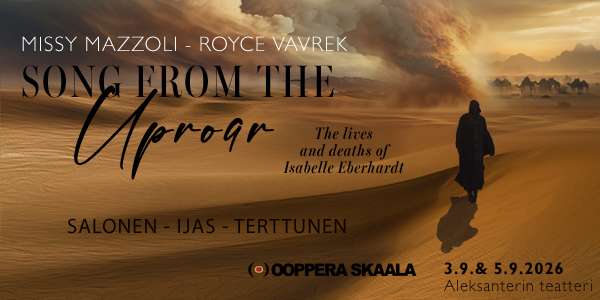
SONG FROM THE UPROAR: The Lives and Deaths of Isabelle Eberhardt
Missy Mazzolin säveltämä Song from the Uproar: The Lives and Deaths of Isabelle Eberhardt on hypnoottinen ja visuaalisesti rikas ooppera, joka vie katsojan poikkeuksellisen naisen elämän ytimeen. Teos pohjautuu sveitsiläissyntyisen seikkailijan, kirjailijan ja tutkimusmatkailijan Isabelle Eberhardtin (1877–1904) päiväkirjoihin ja teksteihin, jotka hehkuvat vapautta, levottomuutta ja palavaa halua ylittää rajoja. Nuorena orvoksi jäänyt Isabelle hylkää Euroopan ja suuntaa Pohjois-Afrikan aavikoille, eläen nomadina, usein mieheksi pukeutuneena, etsien paikkaansa maailmassa ja itsessään.
Ooppera rakentaa kerroksellisen, lähes unenomaiseen tilaan upottavan matkan Isabellen kokemuksiin: suruun ja menetykseen, rakkauden varovaiseen syttymiseen, hurmioituneeseen vapauden tunteeseen ja lopulta kuoleman arvoitukseen. Mazzolin musiikki yhdistää modernin ilmaisun, toisteiset rakenteet ja syvän emotionaalisuuden luoden intensiivisen, lähes meditatiivisen kokonaisuuden.
Song from the Uproar on vahva ja ajankohtainen teos identiteetin etsimisestä, kulttuurien kohtaamisesta ja elämän hauraudesta. Se kutsuu katsojan sukeltamaan rohkeuden, kaipuun ja rajattoman vapauden maailmaan – paikkaan, jossa elämä ja kuolema kietoutuvat toisiinsa yhtä kauniisti kuin armottomasti.
Yhdysvaltalainen säveltäjä Missy Mazzoli on noussut nopeasti nykyoopperan kiinnostavimpien tekijöiden joukkoon. Hänen oopperansa Lincoln in the Bardo saa ensi-iltansa syksyllä New Yorkin Metropolitan-oopperassa.
Mezzosopraano Pihla Terttunen on tulkinnut teoksen roolia jo Keski-Euroopassa, ja Stralsundin oopperan tuotanto valittiin vuoden oopperatapaukseksi 2025 (Opernwelt).
Sävellys Missy Mazzoli
Libretto Royce Vavrek
Ohjaus, lavastus ja visualisointi Ville Salonen
Musiikinjohto Kaapo Ijas
Valosuunnittelu Erno Seppälä
Äänisuunnittelu Teemu Mäkinen
Mezzosopraano Pihla Terttunen
Sopraano Veera Kuusirati
Sopraano Maja Burggraaff
Mezzosopraano Inga Sauranen
Tenori Niki Main
Basso Juhana Kotilainen
Orkesteri:
huilu+piccolo Martta Jämsä
klarinetti+bassoklarinetti Helmi Malmgren
piano Jussi Littunen
kitara Antero Pellikka
kontrabasso Aida Salakka
Esityksen Helsingin Oopperakesä -festivaalilla
to 3.9. klo 18:30 Aleksanterin teatterissa
la 5.9.2026 klo 18:30 Aleksanterin teatterissa
Liput 45/42 € Lippupiste
Esityksen kesto noin 75 minuuttia, ei väliaikaa
Tue oopperatoimintaamme!
Suomalainen oopperataide elää juuri nyt haastavia aikoja. Viime vuosien kulttuurileikkaukset ovat kohdistuneet raskaasti esittävään taiteeseen – myös pieniin ja riippumattomiin toimijoihin. Julkinen tuki on vähentynyt, vaikka tarve taiteelle ei ole kadonnut.
Me uskomme, että ooppera kuuluu kaikille – ei vain harvoille. Jotta voimme jatkaa laadukasta esitystoimintaa tarvitsemme sinun tukeasi.
Tue meitä lahjoituksella
Pienikin summa auttaa meitä kattamaan tuotantokuluja, maksamaan esiintyjien palkkioita ja pitämään lippuhinnat kohtuullisina.
👉 MobilePay 0504315087/Aija Kelly/Ooppera Skaala
Muita tapoja tukea meitä:
Osta lippuja esityksiin
Jaa viestiämme sosiaalisessa mediassa
Taide ei elä ilman yleisöään – kiitos kun olet mukana!